Have you ever received a logistics quotation full of abbreviations such as FOB, CIF and D&D and been completely confused? Have you ever experienced cost overruns or increased risks due to misunderstandings about terminology when communicating with freight forwarders? In cross-border trade, these terms are more than just jargon: they form the legal basis for defining responsibilities, costs and risks.
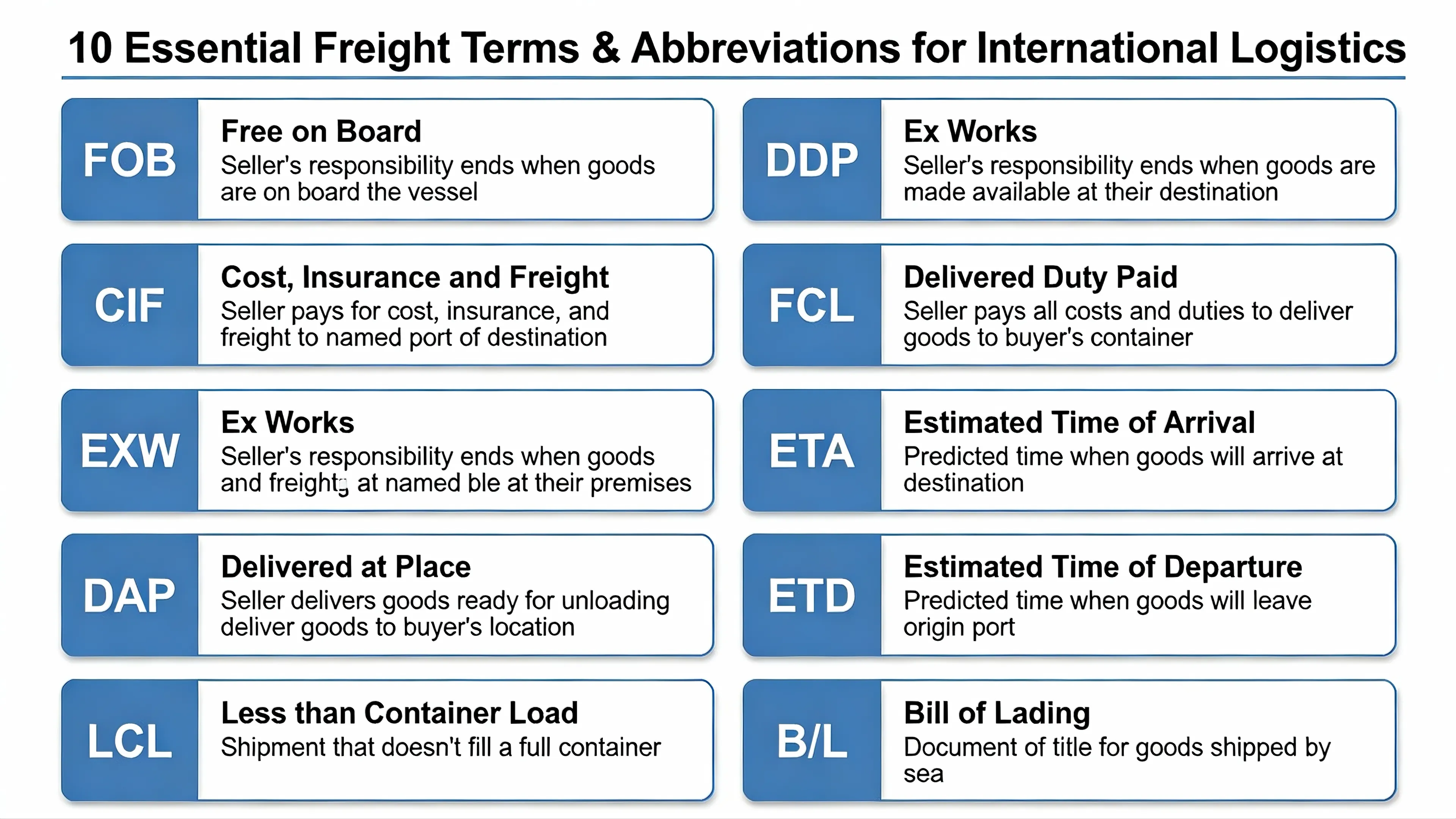
As a LOADSTAR SHIPPING Shipping member, I have compiled a list of the 10 most important international logistics terms that are often confused. Mastering them will enable you to negotiate more confidently and avoid hidden pitfalls more effectively.
I. Trade Terms: The lifeline for clarifying responsibilities and costs
Trade terms (Incoterms®) define the key points of responsibility, costs and risk transfer between buyers and sellers during cargo transportation. Understanding them is the first step in controlling costs.
EXW (Ex Works)
Definition: The seller prepares the goods at their factory or warehouse, after which the buyer is responsible for arranging all subsequent transportation and customs clearance, as well as assuming all risks and costs.
*LOADSTAR SHIPPING Tip: This is the term that places the greatest responsibility on the buyer. You need strong international logistics capabilities to manage the entire process. If you cannot control the entire process, choosing EXW may lead to unexpected costs and problems.
FOB (Free on Board)
Definition: The seller is responsible for transporting the goods to the designated port of shipment and loading them onto the ship. The risk transfers to the buyer the moment the goods cross the ship's rail. The buyer is responsible for subsequent sea freight, insurance and destination port costs.
*LOADSTAR SHIPPING Tip: This is one of the most commonly used terms. Be sure to confirm the clear cut-off time (CY Closing) and sailing time with your freight forwarder. Under FOB, you need to purchase marine insurance yourself, so don't take big risks to save a small amount of money.
CIF (Cost, Insurance and Freight)
Definition: The seller is responsible for paying the freight and insurance costs to transport the goods to the designated port of destination. However, the risk transfer point remains the same as for FOB: when the goods are loaded onto the ship at the port of shipment.
*LOADSTAR SHIPPING Tip: Although CIF seems convenient for buyers, note that risk is not covered for the entire journey. Cargo damage claims must be made through the seller's insurance company, which makes the process more complex. We often advise buyers of important shipments to consider additional insurance, even under CIF terms.
DDP (Delivered Duty Paid)
Definition: The seller assumes maximum responsibility by being responsible for transporting the goods to the buyer's designated destination, completing all import customs clearance and paying all taxes and duties.
*LOADSTAR SHIPPING Tip: This is the most hassle-free term for the buyer. However, it presents significant challenges for the seller, especially if they are unfamiliar with the destination country's tax system and customs clearance procedures, as this can easily lead to substantial losses. It is therefore crucial to choose a reliable partner with a strong customs clearance network in the destination country (such as LOADSTAR SHIPPING).
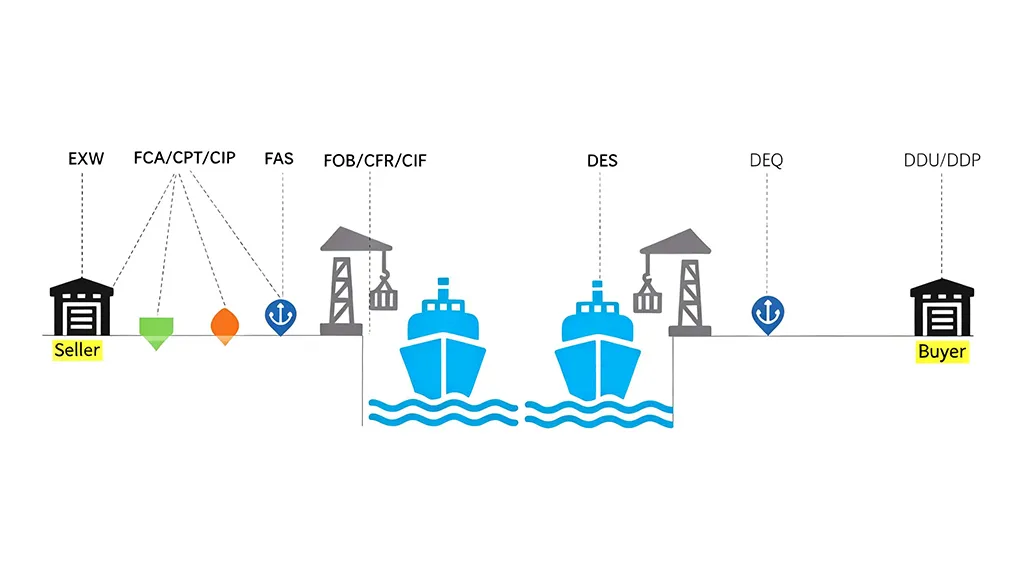
Key points at a glance: The diagram below illustrates how the seller's responsibilities and risks escalate from EXW to DDP.
II. Transportation method: Selecting the Most Suitable 'Seat'
FCL/LCL (Full Container Load/Less than Container Load)
Definition: FCL means that your goods fill one or more containers exclusively. LCL means that your goods do not fill a full container and must be combined with goods from other shippers in the same container.
*LOADSTAR SHIPPING Tip: Choosing between FCL and LCL is not just about volume. FCL is faster and safer (with exclusive lock and seal) and is therefore suitable for large quantities of high-value goods. Although LCL is cheaper per unit, it requires you to share a container, which carries a higher risk of cargo damage and contamination. The overall transportation time is also longer due to the need to wait for consolidation.
III. Key documents and fees: Avoiding Practical 'Pitfalls'
MBL/HBL (Master/House Bill of Lading)
Definition: The MBL is the bill of lading issued by the shipping company to the freight forwarder (e.g. LOADSTAR SHIPPING). The HBL is the bill of lading issued by the freight forwarder to the actual shipper. In LCL shipments, the shipper uses the HBL to collect the goods from the freight forwarder's agent at the destination port.
*LOADSTAR SHIPPING Tip: It is crucial to understand whether you hold an MBL or an HBL, as this determines who you exchange documents with, and from whom you collect the goods at the destination port. Using a freight forwarder that has its own house bill of lading system enables better control of the goods and protects your rights.
SWB (Sea Waybill)
Definition: A non-negotiable transport document, not a document of title. The consignee can collect the goods with proof of identity, without needing original documents.
*LOADSTAR SHIPPING Tip: An SWB is suitable for transactions between trusted partners where the goods do not need to be resold. This avoids the risk of losing original bills of lading and allows for faster pickup. However, if you need to control ownership of the goods or resell goods in transit, you must use an original bill of lading.
AMS/ISF (Automated Manifest System/Import Security Filing)
Definition: AMS requires shipping companies to submit electronic manifests to U.S. Customs 24 hours before the vessel arrives in the United States. The ISF (also known as the '10+2' rule) requires importers to provide ten pieces of information twenty-four hours before loading, while the shipping company provides two.
*LOADSTAR SHIPPING Tip: These two items are mandatory! Incorrect information, omissions or late submissions may result in fines of at least several thousand dollars. Professional freight forwarders provide strict pre-screening and reminder services to ensure everything runs smoothly.
D&D (Demurrage & Detention)
Definition: Demurrage refers to the charges incurred after the free storage time for containers at the destination port terminal expires. Detention refers to the charges incurred when containers are not returned to the designated depot within the free usage period after being picked up from the terminal.
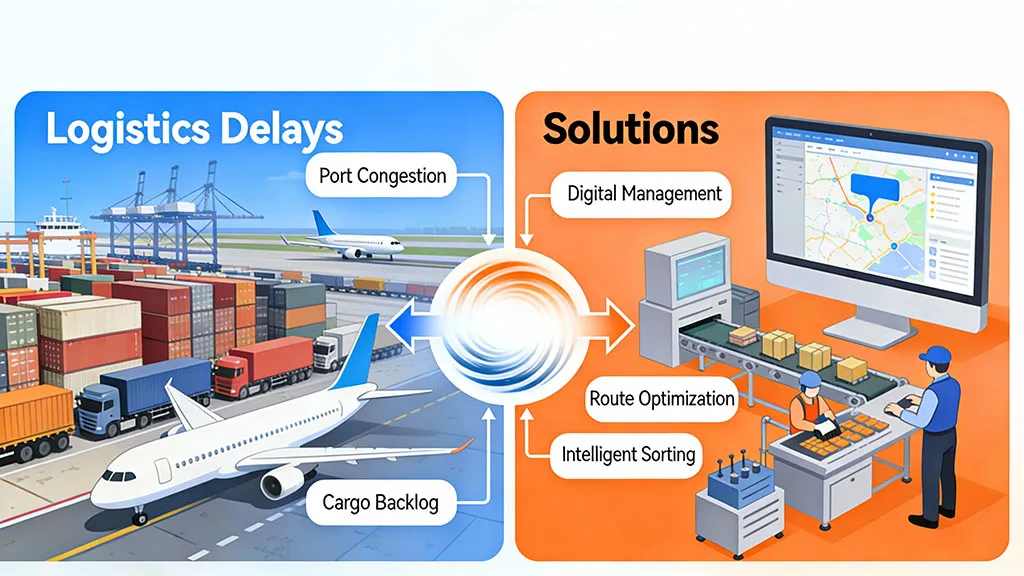
*LOADSTAR SHIPPING Tip: This is the most common cause of extra costs. These costs can accumulate rapidly during port congestion, inland transportation delays or customs clearance issues. You need an experienced freight forwarder to provide advance warnings about free time and assist in negotiating fee reductions with the shipping company (e.g. through LOADSTAR SHIPPING's global agent network).
IV. Summary and action guide
Mastering these ten terms is the first step to achieving smooth communication in international logistics. They are interconnected:
- When negotiating contracts, clarifying whether the cost is FOB or CIF determines your cost baseline.
- When arranging transportation, choosing FCL or LCL based on cargo volume affects costs and safety.
- During operational execution, understanding MBL/HBL, paying attention to AMS/ISF deadlines and constantly monitoring the D&D clock will help to avoid unexpected costs.
At LOADSTAR SHIPPING, we believe that transparent information is the cornerstone of building trust. We not only help you transport goods, but also strive to make you an informed expert in the field of logistics.
(This article is explained based on the latest version of Incoterms® 2020, reviewed by LOADSTAR SHIPPING for your reference. Specific contract terms should be subject to professional legal and business advice.)