A global fracture has emerged in postal networks due to a new tariff rule, leaving cross-border e-commerce sellers who rely on traditional parcel channels at a crossroads for supply chain restructuring.
The global postal network is experiencing disruptions due to a new tariff policy, leaving cross-border e-commerce sellers who rely on traditional small parcel channels at a critical juncture in reshaping their supply chains.
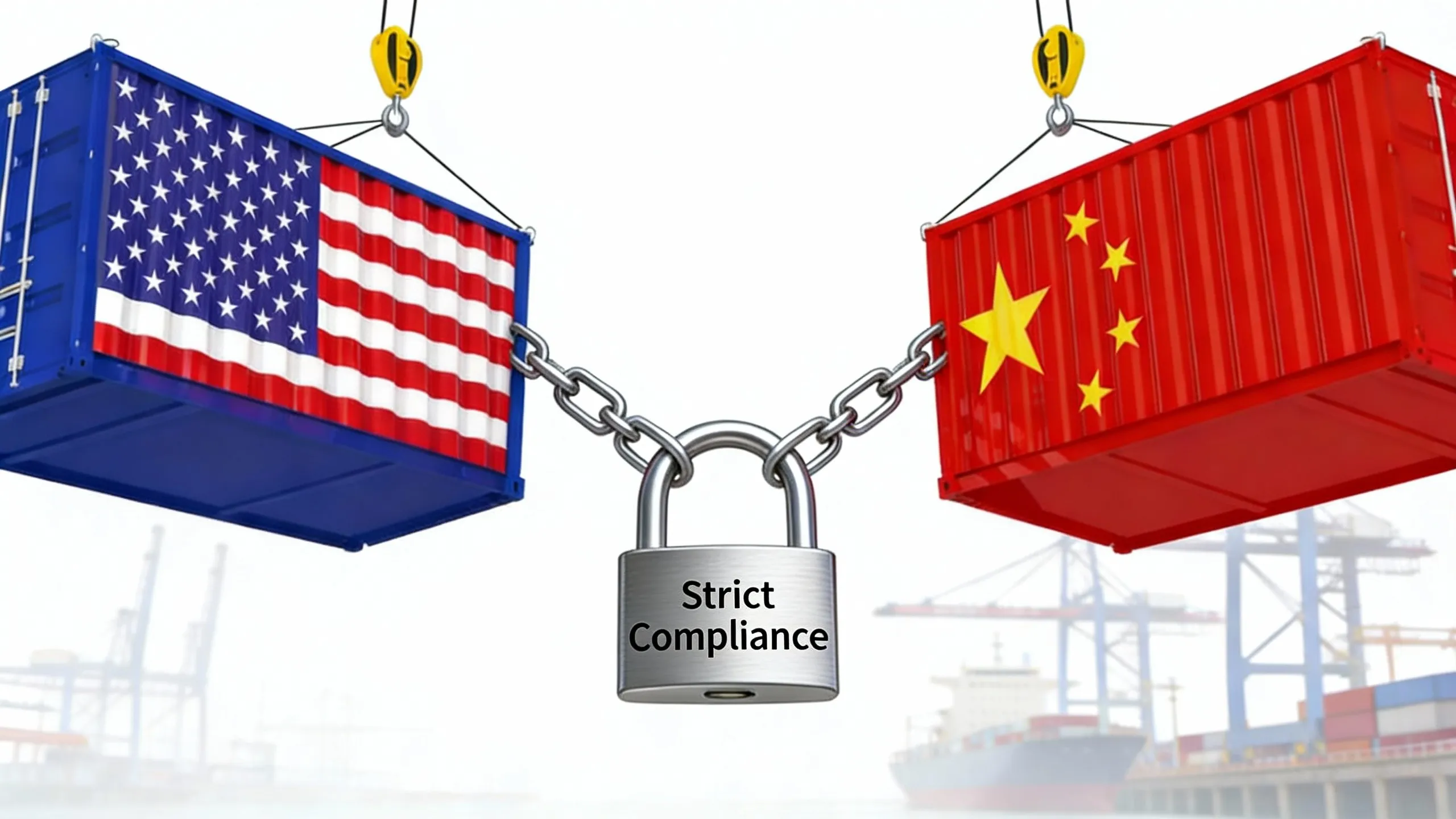
Since May 2nd, 2025, the United States has officially eliminated the duty-free treatment for low-value imported goods (typically under $800) originating from mainland China and Hong Kong. This policy not only changes the tariff calculation method but also, due to complex compliance and payment requirements, has led several postal operators worldwide, including Chunghwa Post, to announce the suspension of accepting merchandise mail destined for the United States. For many cross-border e-commerce sellers, this means that their most economical and commonly used logistics channel has been cut off overnight, making the reassessment of their logistics strategy an urgent matter of survival.
I. The Rule Change: From "Duty-Free Convenience" to "Strict Compliance"
The core of this shift lies in a fundamental change to the U.S. tariff collection model.
1. Duties Apply: All merchandise mail originating from Mainland China and Hong Kong and entering the U.S. via the international postal network is now subject to tariffs.
2. Liability Shift: The liability for duty payment has shifted from the "consignee" to requiring "advance payment by the transporting carrier or a certified third party," posing a significant operational challenge for postal systems.
3. Cost Surge: Sellers may need to absorb additional costs for previously duty-free goods, further squeezing margins for low-margin items.
It is precisely this "advance duty payment" mechanism that caused many postal services to halt. Carriers are required to maintain high-value bonds with U.S. Customs and Border Protection (CBP) and establish complex reporting systems, which are difficult to implement in the short term.
II. Channel Assessment: Pros and Cons of Three Main Alternatives
With postal channels disrupted, sellers must turn to other logistics options. The table below compares three mainstream alternatives:
|
Evaluation Dimension
|
Commercial Express (DHL, FedEx, UPS)
|
Dedicated Logistics Service (e.g., "U.S. Special Line")
|
Overseas Fulfillment (FBA/3PL)
|
|
Core Advantage
|
Extremely fast (3-5 days), stable network, strong customs clearance, complete end-to-end tracking.
|
Best cost-performance, faster than post (7-15 days), offers tailored customs and tax support.
|
Best customer experience, local delivery is very fast (1-3 days), completely avoids inbound clearance delays.
|
|
Main Challenge
|
High cost, significant pressure on low-value goods; may face inspections due to commodity sensitivity.
|
Service quality varies; requires careful vetting; network coverage may be less extensive than express.
|
High capital commitment, requires accurate sales forecasting, risk of overstock; complex initial setup.
|
|
Applicable scenarios
|
High-value, urgent replenishment, time-sensitive goods; samples.
|
The majority of e-commerce retail parcels; the primary choice balancing cost, speed, and compliance needs.
|
Best-selling, fast-moving standard products; sellers aiming to elevate customer experience and build competitive advantage.
|
LOADSTAR SHIPPING Perspective: When choosing a channel, don't look at freight cost alone. A comprehensive evaluation of product value, profit margin, sales velocity, and customer expectations is key to finding the optimal solution. For most sellers, partnering with a logistics provider offering compliant dedicated lines is the most pragmatic choice during this transition.
III. Compliance Essentials: Ensuring Smooth Passage Through New Channels
Switching channels is only the first step; ensuring compliance under the new rules is critical. Sellers and their logistics partners must focus on:
Accurate Declaration & Coding: Provide accurate commercial invoices with correct descriptions, quantities, and values. Using the correct U.S. Harmonized System (HS) code is paramount, as errors are a leading cause of inspection, delay, and penalties.
Prepare Compliant Documents: Proactively work with suppliers to obtain valid documents like Certificates of Origin in advance to support compliant declarations when needed.
Understand New Inspection Rules: CBP has intensified its inspection efforts. For sensitive goods like electronics or apparel, ensure declaration details match the physical goods exactly to avoid under-valuation or misdeclaration.
IV. Action Guide: LOADSTAR SHIPPING's Three-Step Advice for Sellers
1. Audit and Switch Immediately: Review your current shipping routes. If you still rely on traditional postal parcels, immediately begin testing alternative channels. Prioritize dedicated line services that offer "DDP" (Delivered Duty Paid) or clear duty calculation.
2. Strengthen Internal Compliance: Train your team on the new rules and standardize internal shipping processes to ensure accuracy and completeness for every shipment. Consider using digital logistics platforms to manage HS codes and customs documents, reducing human error.
3. Build a Resilient Supply Chain: Treat this challenge as an opportunity to optimize. For best-selling items, test the waters with overseas fulfillment to evaluate the benefits of local delivery. Establish a hybrid model combining "Direct Shipping from China" with "Overseas Fulfillment" to increase resilience.
The regulatory winds have shifted, and the old "comfort zone" is gone. This challenge is also an industry shake-up. Sellers who can rapidly adapt to the new rules and rebuild a compliant, efficient logistics system will gain a competitive edge.
During this period of regulatory change, the greatest cost is not increased freight, but the loss of sales and customers due to supply chain disruption. LOADSTAR SHIPPING not only provides diversified, compliant logistics solutions but also aims to be your strategic logistics partner, helping you navigate change, assess risks, and jointly build a more resilient cross-border supply chain.