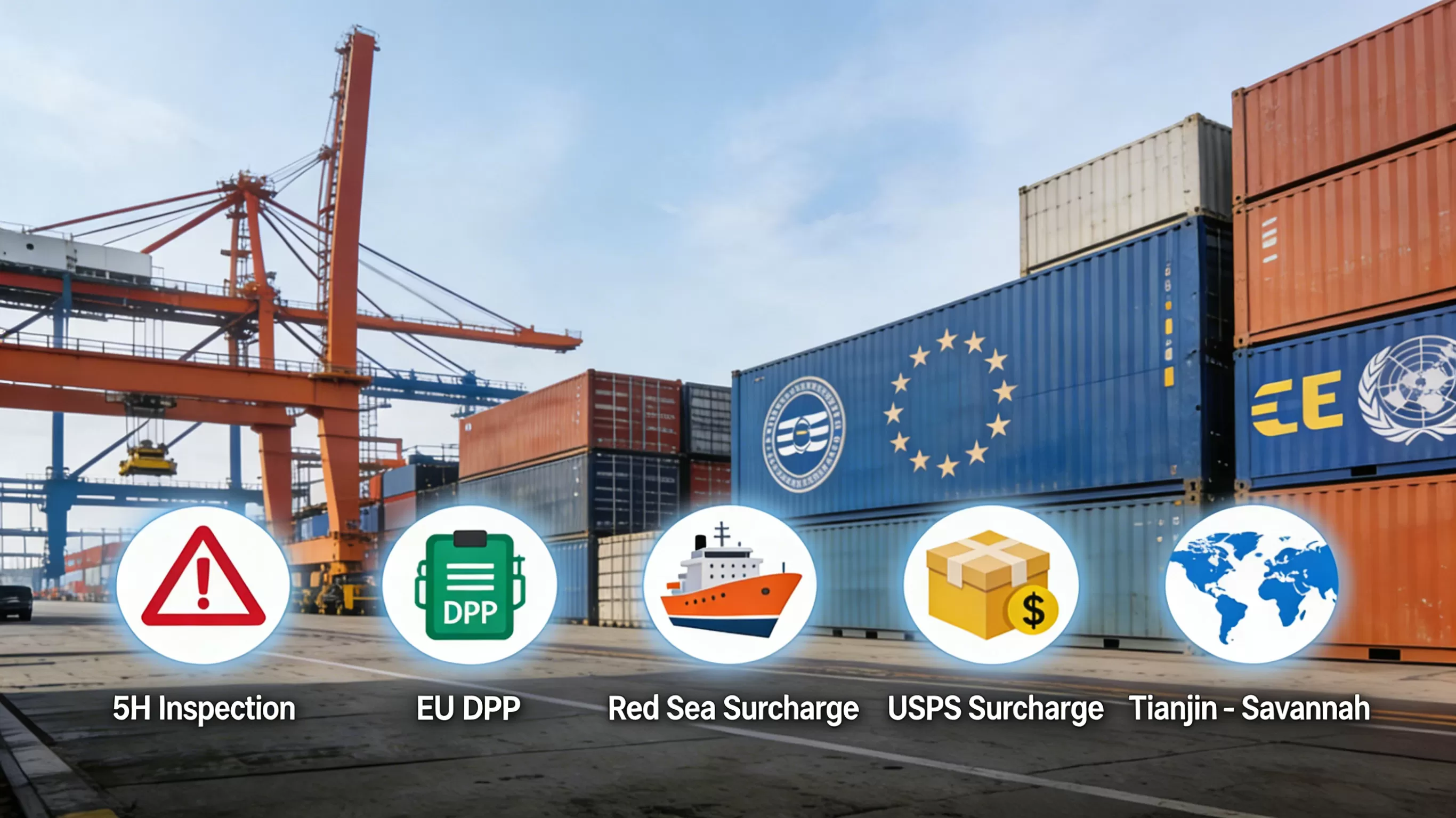
An invisible tariff threshold is rising in Western markets. For e-commerce sellers accustomed to low-cost, direct-to-consumer sales, an era of easy profits built on policy advantages is rapidly coming to a close.
As 2025 draws to a close, decisive moves from US and EU customs authorities have struck at the core of global cross-border trade: low-value parcels. The EU has formally legislated an end to duty-free allowances for small packages, while the US has adjusted its tariff framework for several nations. These are not isolated events but part of a systemic recalibration of global trade rules in response to the digital retail boom. The ripple effects will spread from sellers' profit margins and logistics choices right to the end consumer's shopping cart.
---------------------------------------------------------------------------------------------------------------------------------------------------------------------------------------------------------------------------
I. The New Rules: Two Policies Building a "Tariff Threshold"
The core of this policy shift is the concurrent tightening of long-standing "de minimis" thresholds in both the US and EU.
1. The European Union: A Two-Phase End to Duty-Free Imports
The European Commission has finalized new rules. Starting July 1, 2026, all imported goods valued under 150 euros (except specific duty-free items like books) will lose their duty-free status and be subject to a flat 3-euro customs duty. This is just phase one. By November 2026, a separate "handling fee" for all such parcels will be added, with the specific rate yet to be determined. This move aims to close a tax gap and cover the growing costs of supervising the massive inflow of small packages.
2. The United States: Framework Adjustments and a Clear Signal
Almost simultaneously, the US Trade Representative announced a new tariff framework for certain goods from Switzerland, Liechtenstein, and others. While the direct impact is limited, the signal is clear: the US is scrutinizing all trade relationships more granularly and is willing to use tariffs as a tool. Combined with the earlier termination of the $800 de minimis exemption for packages from China, the era of "lenient scrutiny" for small parcels entering the US is also over.
II. Deep Dive: Systemic Cost Reshaping and Industry Realignment
The new rules mean far more than "paying a few extra euros." They will trigger a chain reaction, systematically reshaping industry cost structures and the competitive landscape.
1. For Sellers: The "Fine-Slicing" of Profits and Compliance Risk
Soaring Costs, Eroded Margins: For sellers in fast fashion or general merchandise where low prices and thin margins are key, a flat 3-euro duty could represent 5-10% of their product cost. With the impending handling fee, the profitability of many items will need complete recalculation.
Skyrocketing Compliance Complexity: Previously, sub-threshold parcels cleared customs via a simple process. Now, every parcel requires formal declaration and duty payment. Sellers or their logistics providers must now be capable of accurately classifying, declaring, and paying duties for a vast array of SKUs. Operational errors will lead directly to delays, fines, or seizures.
2. For Logistics: "Value Reassessment" of Channels and Model Innovation
The Postal Advantage Dwindles: The core appeal of traditional international postal packets was cost-effectiveness and simplicity, but their clearance models struggle with efficient, mass duty payment. Their price and speed advantage will be significantly weakened.
Rise of Dedicated Lines and Overseas Fulfillment: Cross-border dedicated logistics lines offering integrated "Delivered Duty Paid" (DDP) services will see their value surge. Concurrently, the overseas fulfillment model (e.g., FBA, 3PL warehouses) gains unprecedented advantage: goods shipped in bulk via commercial channels incur lower, standardized duty rates, and local delivery avoids these new parcel taxes entirely while offering faster shipment times.
3. For the Market: "Dynamic Adjustment" and Consumer Shift
Pressure on SMEs, Acceleration of Branding: Small and medium-sized sellers unable to absorb the new costs or lacking compliance capabilities may be forced out. Industry resources will further consolidate towards larger sellers capable of investing in overseas warehousing and building brand premium.
Potential Shift in Consumer Behavior: European consumers buying low-cost goods from abroad will now see the final price as "item price + shipping + duty." This price sensitivity may shift some demand back to domestic e-commerce platforms or local discount channels.
III. LOADSTAR SHIPPING Professional Advice: From Reaction to Strategy
In the face of this irreversible policy trend, proactive adaptation is the only path. We recommend cross-border sellers immediately take the following steps to turn this challenge into an opportunity for supply chain optimization and competitive enhancement.
Step 1: Urgent Cost Calculation & Audit
Act Now: Conduct a full review of your top-selling SKUs destined for the US and EU. Precisely calculate the actual impact of new duties and fees on per-unit gross profit. Re-evaluate profitability using the new formula: (Product Cost + Shipping + Duty + Handling Fee) / Selling Price.
Channel Audit: Assess whether your current logistics partners have mature DDP service capabilities and systems to provide you with clear compliance declaration and payment solutions.
Step 2: Optimize Logistics Strategy & Channel Mix
1. Segment by Value: For high-value, high-margin items, continue to optimize direct shipping via reliable DDP partners. For low-value, heavy items, seriously evaluate a switch to overseas fulfillment.
2. Test and Transition: Don't wait until July 2026. Begin small-batch testing of alternative logistics solutions now—such as premium dedicated lines or overseas warehouses in different countries—to gather real data on speed, cost, and user experience.
3. Build a Flexible Supply Chain: Consider a "hybrid-channel" strategy: stock best-sellers in overseas warehouses for superior customer experience; use direct shipping for long-tail items and new product testing. This balances risk with flexibility.
Step 3: Elevate Internal Operations & Compliance
Standardize Product Data: Build and maintain an accurate product database with detailed descriptions, materials, uses, and correct EU/US HS Codes for every SKU—this is the foundation of compliant declaration.
Train Your Teams: Ensure your procurement, operations, and finance teams understand the impact on cost structures so that pricing, promotion, and profit calculation models are updated promptly.
Step 4: Upgrade Your Logistics Partner to a Strategic Advisor
In this new tariff environment, the value of a logistics provider extends far beyond transportation. You need a partner that offers:
Forward-Looking Policy Intelligence: Continuous monitoring and interpretation of customs developments.
Diversified Solution Portfolio: A full range of options from DDP direct lines to overseas fulfillment and distribution.
Transparent Cost Management: Clear breakdowns of all duties, taxes, and fees.
---------------------------------------------------------------------------------------------------------------------------------------------------------------------------------------------------------------------------
The new tariff rules have closed an old door but have opened several new windows. They are forcibly transitioning cross-border e-commerce from a stage driven by " traffic dividend " to one powered by "supply chain efficiency" and "localized service." For LOADSTAR SHIPPING, with our established compliant networks and deep expertise in warehousing and fulfillment across the US and EU, we are ready to navigate this transformation with you, turning compliance costs into your long-term competitive advantage.