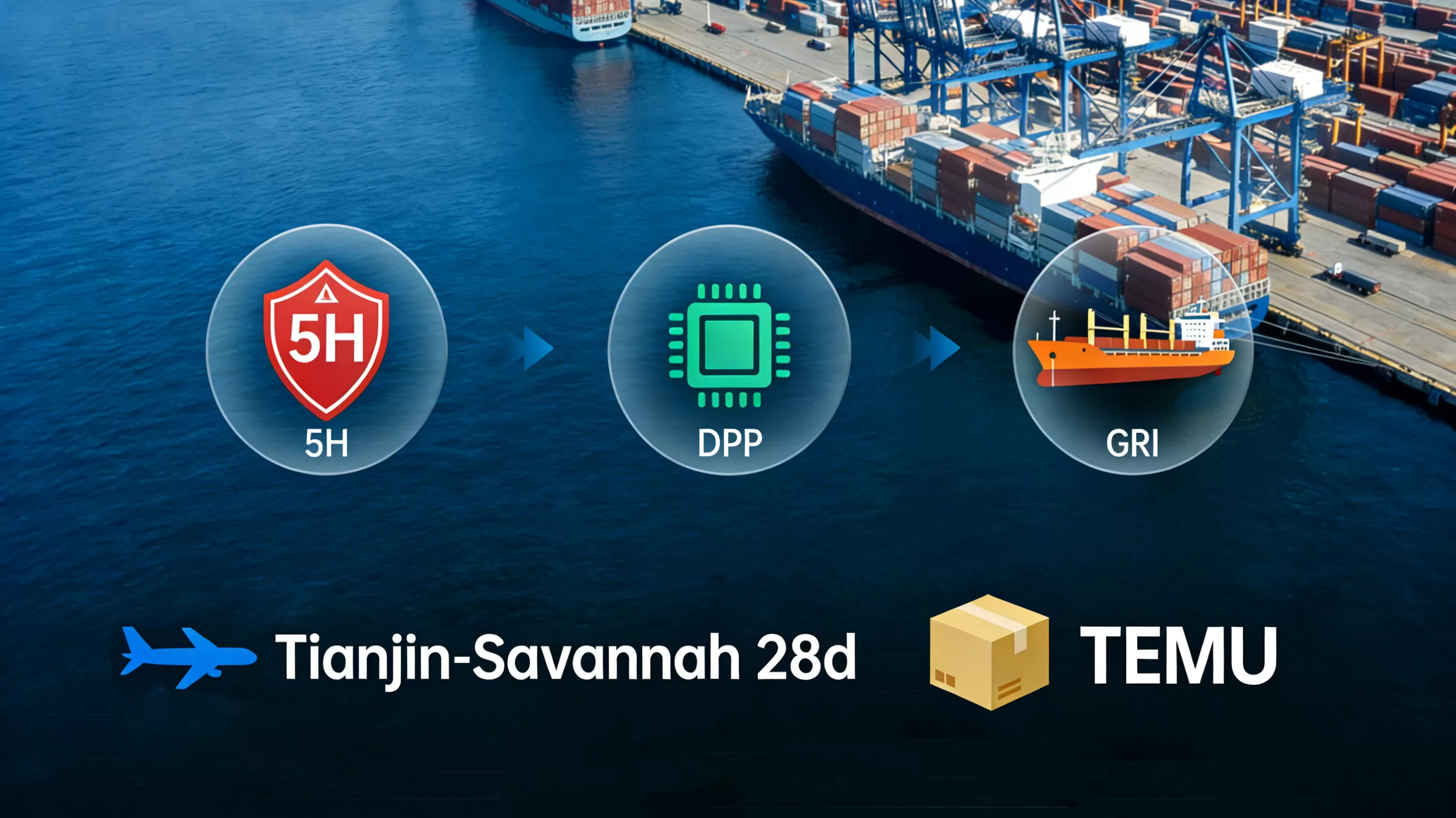
The spring of 2026 has been anything but calm for the global logistics industry. Before March even ends, a series of "thunderbolts" capable of rewriting the rules of supply chain management have struck in quick succession—from the U.S. Customs "5H" compliance storm to the EU's Digital Product Passport legislation; from escalating Red Sea tensions triggering war risk surcharges to the USPS sounding an early alarm for the peak season. Amidst these challenges, the launch of a new direct shipping route from Tianjin to the U.S. East Coast offers a glimmer of hope for exporters navigating turbulent waters.
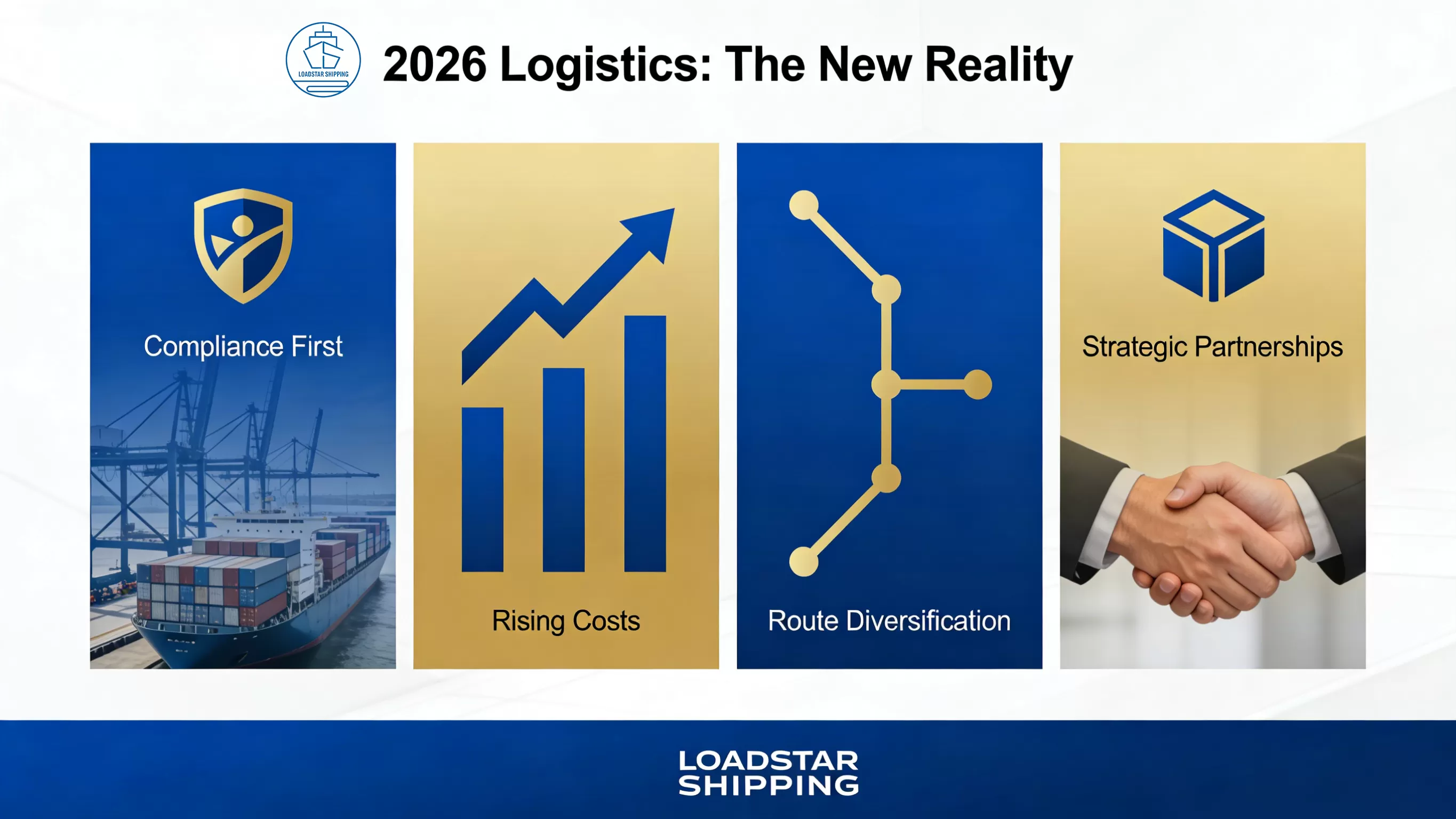
These five seemingly independent events point to the same underlying trend: global supply chains are entering a new era defined by strict compliance, rising costs, and regionalization at an unprecedented pace. This article breaks down the essence and impact of each development and provides actionable strategies to help you navigate the shifting landscape.
Thunderbolt 1: The U.S. Customs "5H" Storm — Compliance is No Longer a Cost, but a "Matter of Survival"
What Happened:
In early 2026, U.S. Customs and Border Protection (CBP) launched a specialized "Fast Doc Review" unit alongside the stringent "5H" inspection code, focusing on verifying the authenticity of trade transactions. According to industry data, over 2,000 Chinese containers were forced into re-export from the ports of Los Angeles and Long Beach in February alone. Direct financial losses per container commonly exceeded $10,000, with no avenue for appeal.
In-Depth Analysis:
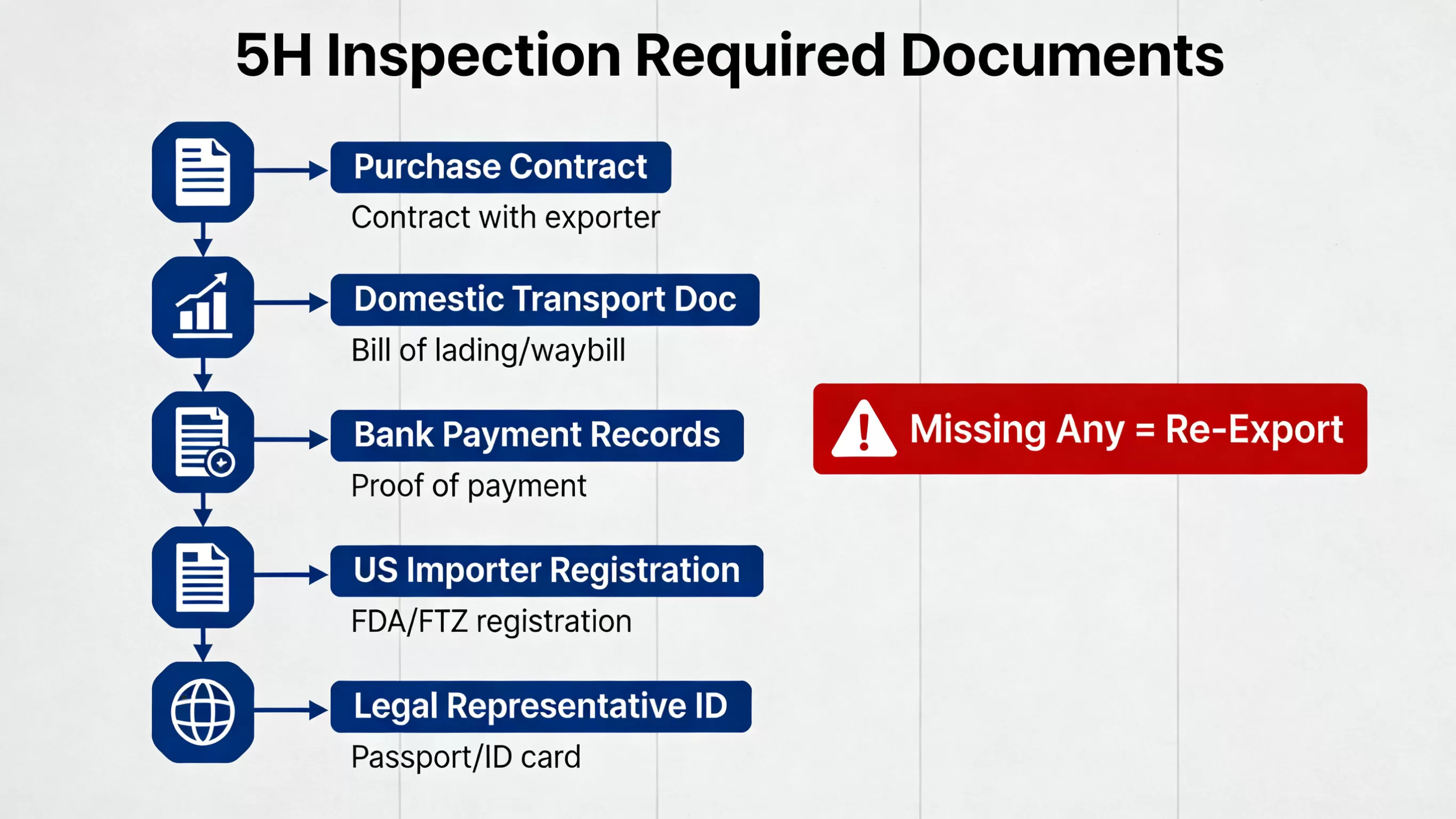
The core of the "5H" storm is not about traditional issues like under-valuation or misclassification, but rather verification of trade authenticity. CBP now requires importers to provide:
-
Purchase contracts with Chinese factories
-
Domestic transport documentation within China
-
Bank records proving payment between the U.S. buyer and Chinese seller
-
Evidence of the U.S. importer's business registration and physical operations
-
Identification documents for the importer's legal representative
If documentation is insufficient or questionable, CBP can issue a re-export order within 3 to 5 days—with no opportunity to correct deficiencies and no right to appeal. The risk is amplified for less-than-container-load (LCL) shipments, where a single participant's documentation failure can lead to the rejection of an entire container.
Impact on Businesses:
-
Direct financial losses: Over $10,000 per container
-
Indirect losses: Inventory shortages, order defaults, customer attrition
-
Industry ripple effects: A wave of freight forwarder insolvencies is anticipated as unprepared intermediaries bear the cost of re-export
Thunderbolt 2: The EU Digital Product Passport — The "Digital Upgrade" of Green Trade Barriers
What Happened:
On March 20, the European Commission formally adopted the Digital Product Passport (DPP) regulation. Effective January 1, 2027, products entering the EU market—including electronics, textiles, and batteries—must be accompanied by a digital passport containing comprehensive lifecycle information (raw material sources, place of production, carbon footprint, recycling guidelines, etc.). Non-compliant products will be denied entry.
In-Depth Analysis:
The DPP is far more than a digital label; it is a cornerstone of the EU's Circular Economy Action Plan. Key requirements include:
-
Full product traceability and verifiability
-
Standardized data accessible to regulators, recyclers, and consumers
-
Collaborative data collection across the supply chain
This means Chinese exporters must fundamentally restructure their product data management systems, encompassing everything from R&D and sourcing to production and logistics. Any missing data in the chain could lead to customs clearance failure.
Impact on Businesses:
-
Significant rise in compliance costs: Investment in data collection systems and third-party certification
-
Increased supply chain transparency requirements: Untraceable materials will be phased out
-
Tight timeline: Less than 10 months remain before the January 2027 deadline
Thunderbolt 3: Red Sea War Risk Surcharge — Geopolitics Continues to "Hijack" Freight Rates
What Happened:
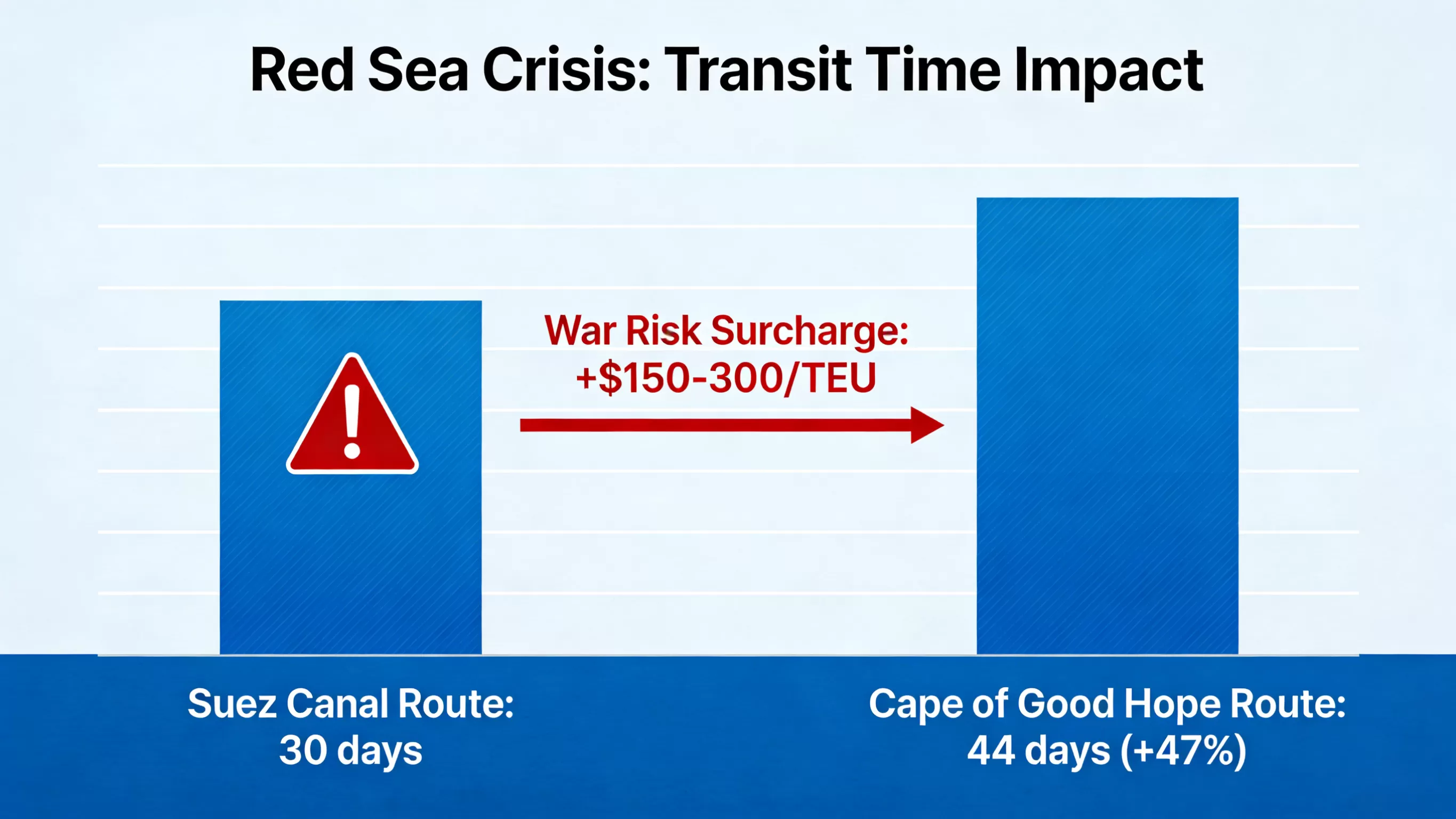
Due to the deteriorating security situation in the Red Sea region, major carriers including Maersk, MSC, and CMA CGM have announced the imposition of a new War Risk Surcharge on all routes transiting the Red Sea/Gulf of Aden, effective April 1, 2026. The surcharge ranges from $150 to $300 per TEU.
In-Depth Analysis:
The Red Sea crisis has evolved from a short-term disruption into a permanent capacity sink. Rerouting via the Cape of Good Hope adds 10-14 days to transit times and absorbs an estimated 5-7% of global effective vessel capacity. This new surcharge represents carriers' efforts to pass on increased risk costs and test market dynamics.
Impact on Businesses:
-
Continued elevated freight rates on Asia-Europe lanes
-
Extended transit times complicating inventory management
-
Increased risk of further capacity adjustments (e.g., blank sailings) by carriers
Thunderbolt 4: USPS Peak Season Surcharge — An Early Warning on Last-Mile Costs
What Happened:
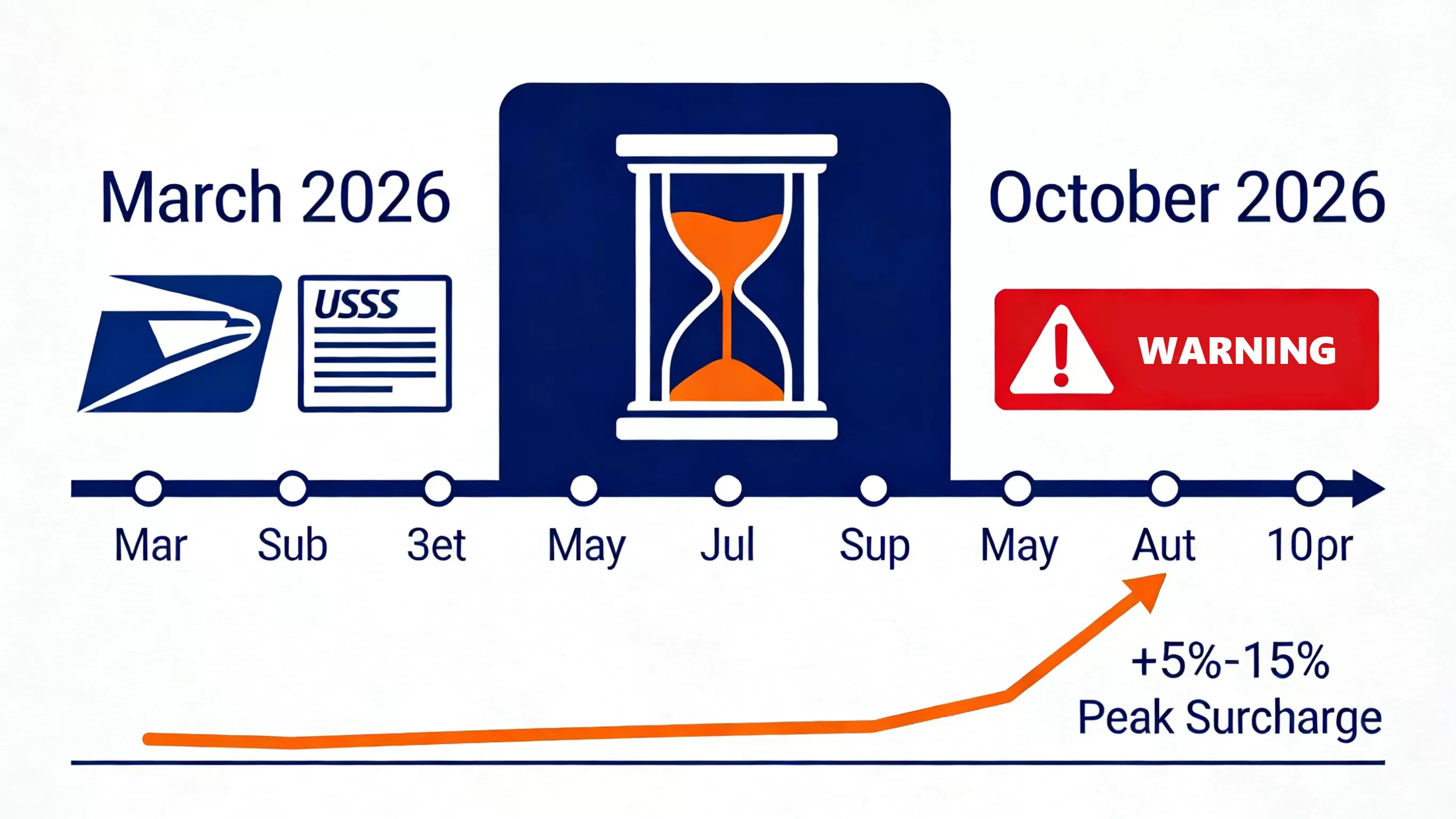
On March 22, the United States Postal Service (USPS) released its 2026 peak season surcharge schedule. Beginning in October, temporary surcharges of 5% to 15% will apply to oversized packages, overweight packages, and items shipped during peak periods.
In-Depth Analysis:
By issuing this warning seven months in advance, USPS signals two key points:
For cross-border e-commerce sellers, this means:
Thunderbolt 5: Tianjin Port's New Direct Route to the U.S. East Coast — A "Breakthrough Channel" Amidst the Storm
What Happened:
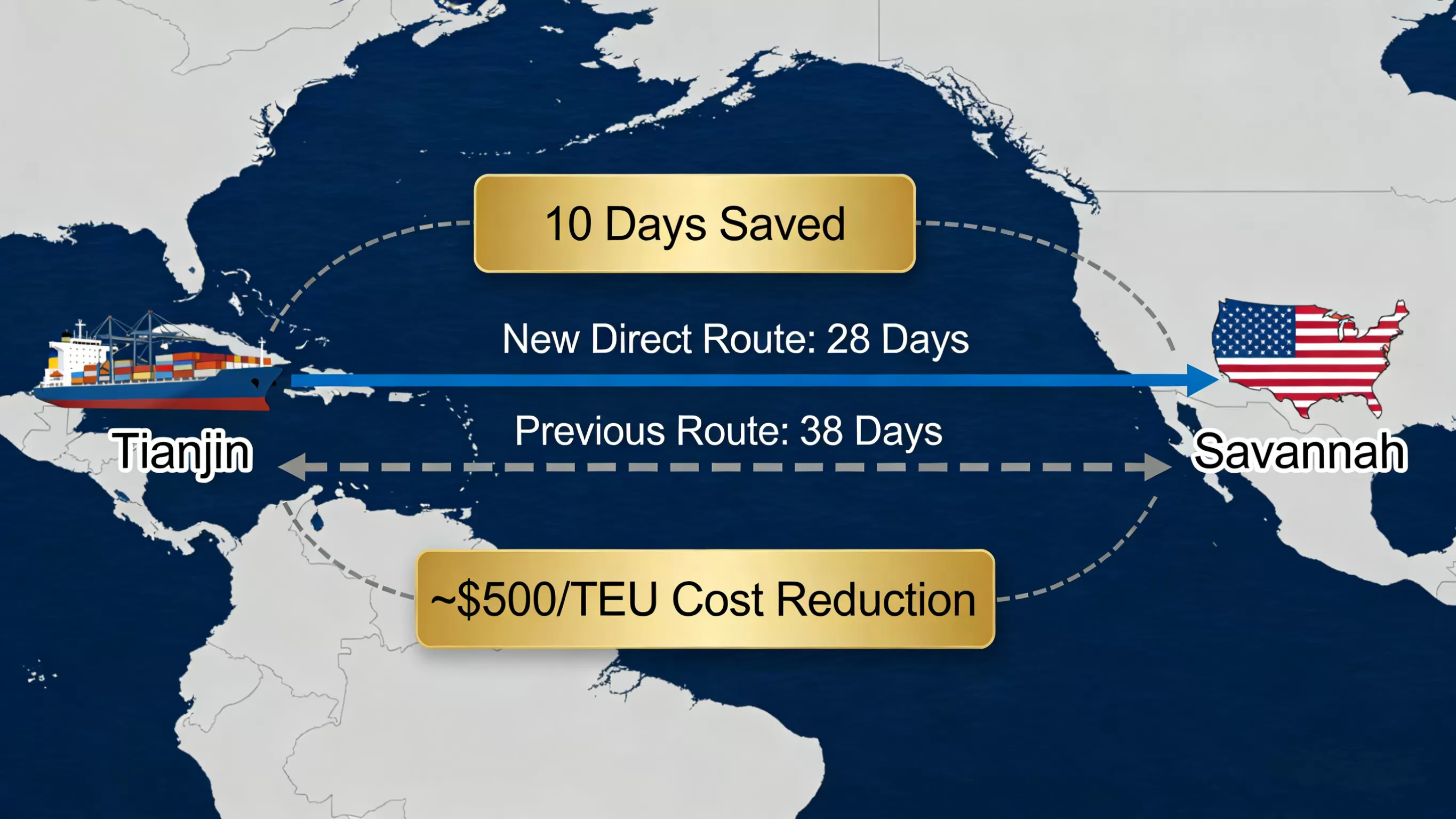
On March 24, Tianjin Port Group announced the launch of a new direct container route to the Port of Savannah, U.S. East Coast. Transit time is just 28 days—approximately 10 days shorter than previous transshipment options. The service, operated by MSC, initially deploys six 8,000 TEU container vessels.
In-Depth Analysis:
Amidst the pressures outlined above, this new route offers a valuable alternative. It provides North China exporters with a more efficient gateway to the U.S. East Coast while helping alleviate congestion at West Coast ports. The 28-day transit translates to:
-
Improved working capital efficiency
-
Reduced inventory holding pressure
-
Greater flexibility for peak season replenishment
LOADSTAR SHIPPING Perspective: From "Reactive Response" to "Proactive Strategy"
While these five "thunderbolts" may seem like isolated policy shifts or market events, they collectively point to a fundamental transformation: the rules governing global supply chains are being systematically rewritten. Whether it is U.S. trade authenticity reviews, EU digital green barriers, or the prolonged geopolitical risks in the Red Sea, businesses are being compelled to shift from a "cost-first" mindset to one prioritizing compliance and resilience.
For cross-border sellers and importers, we recommend the following actions:
1. Front-Load Compliance — Build a "Firewall"
-
Integrate purchase contracts, payment records, and physical operation evidence into your pre-shipment standard operating procedures—don't wait for a CBP inquiry.
-
Begin upgrading your product data management systems now to prepare for the EU DPP deadline.
2. Precision Costing — Avoid "Invisible Erosion"
-
Factor new surcharges (Red Sea, peak season) into your annual budget.
-
Re-evaluate the cost-benefit balance between direct shipping and overseas warehousing.
3. Diversify Routes — Reduce "Single Points of Failure"
4. Partner Strategically — Choose a True Logistics Partner
-
Select logistics providers with proven capabilities in compliance pre-screening, diversified network resources, and proactive risk monitoring.
-
Build collaborative relationships based on data sharing, not just transactional exchanges.
Markets will always face turbulence. The true competitive advantage lies not in finding the lowest freight rate, but in ensuring reliable delivery and predictable service amidst uncertainty. In this new era of heightened compliance, rising costs, and regional supply chain restructuring, LOADSTAR SHIPPING is committed to being your guide—interpreting the rules, providing early warnings, and optimizing your path forward—as we navigate these shifting currents together.
Have questions about how these changes impact your business? Contact the LOADSTAR SHIPPING team for tailored compliance and logistics optimization solutions.